
Your Complete Guide to Epoxy Flooring
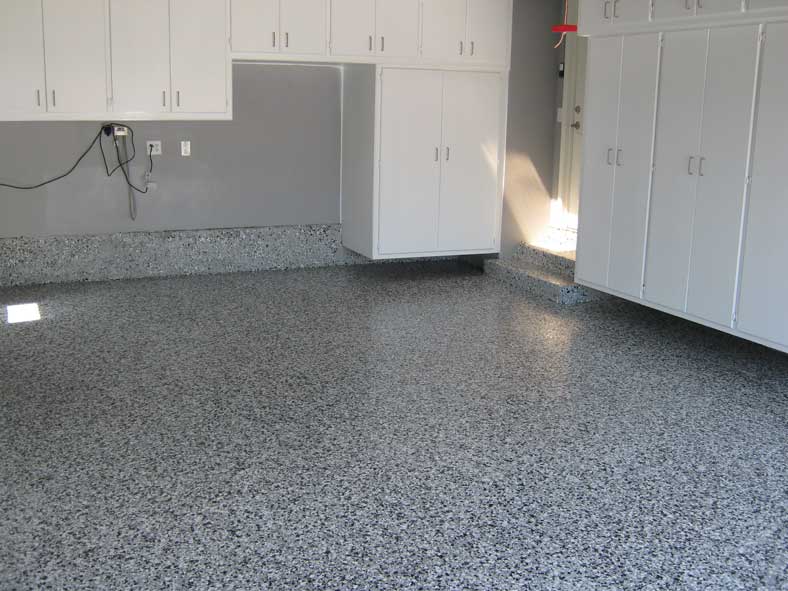
In this guide, we’ll examine epoxy flooring and provide a breakdown of everything you need to know about epoxy floor coatings.
What is Epoxy?
History of Epoxy
The Types of Epoxy Flooring
There are three main types of epoxy flooring. These are 100% solids, water-based, and solvent-based epoxy. These epoxies vary in usage, composition, and benefits. Below, we’ll take a closer look at these epoxy flooring types:
- 100% Solids Epoxy: In most cases, when professional epoxy flooring is referred, 100% solids epoxy is being described. These epoxy floors offer the most benefits, last the longest, and comply with most building regulations. However, they’re not DIY-friendly and should always be installed by a licensed professional.
- Water-based Epoxy: These epoxy coatings are most commonly found in DIY-kits in stores. They’re best suited for primer coatings or as an epoxy floor paint as they spread out thinly and lack the durability and longevity found in 100% solids epoxy.
- Solvent-based Epoxy: Due to its nature of being solvent-based, these epoxy floors are slowly circulating out of use in most industries. These epoxy coatings typically contain Volatile Organic Chemicals, VOCs, that don’t comply with most building regulations.
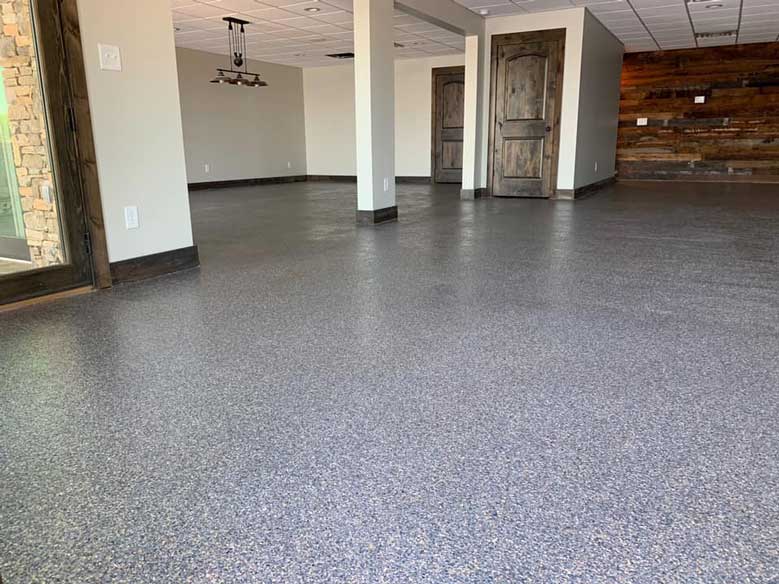
Epoxy Flooring Styles
Epoxy flooring comes in many different styles. These styles offer various colors, patterns, and textures that allow for high customization from users. Below, you can see the various epoxy flooring styles:
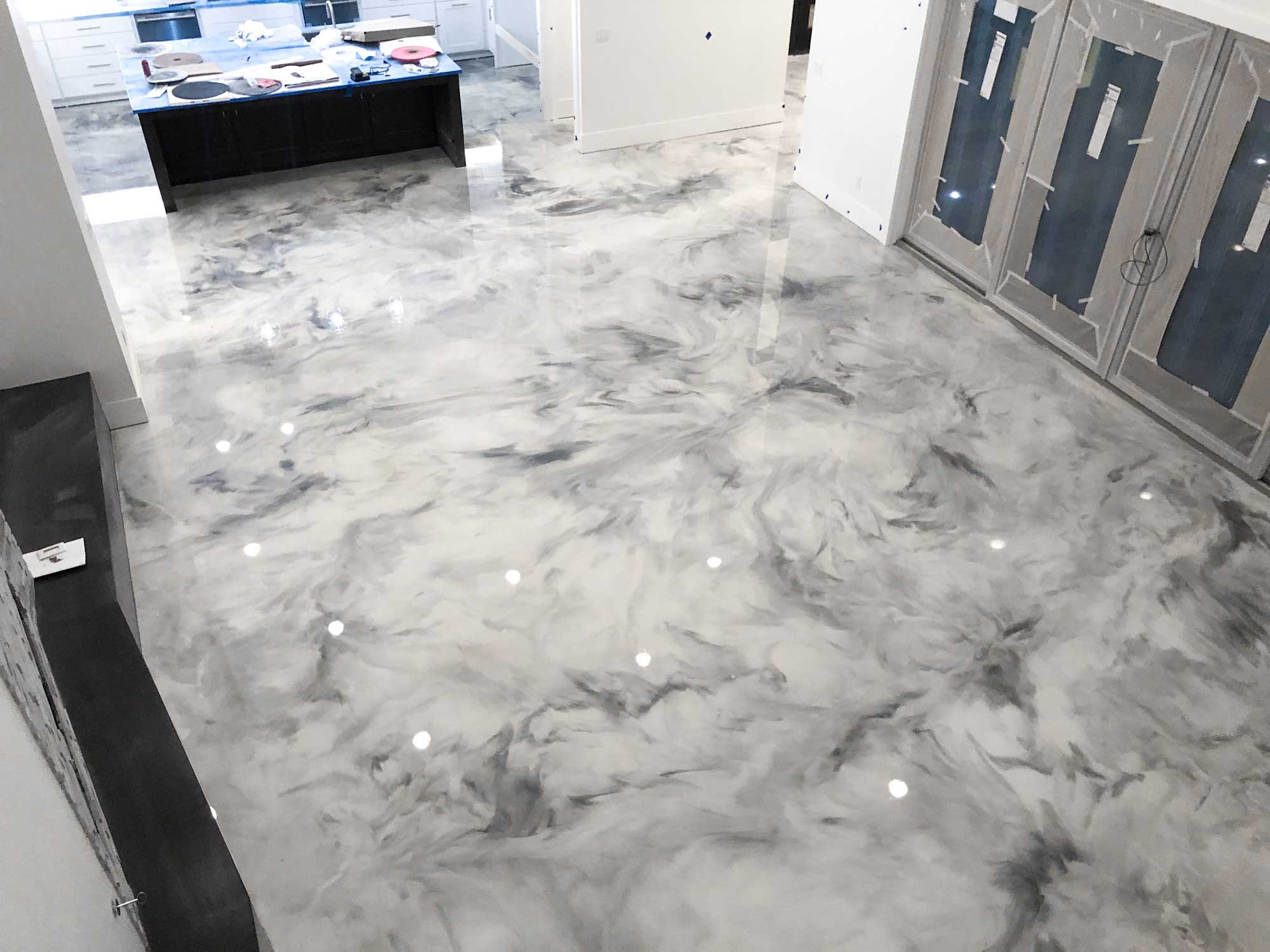
Standard Epoxy Flooring
Standard epoxy flooring is the most common epoxy style available. These floor coatings come in a near-limitless supply of colors and patterns to create almost any design. From tiled patterns to stripes to simple, solid-color floors, standard epoxy is remarkably versatile.
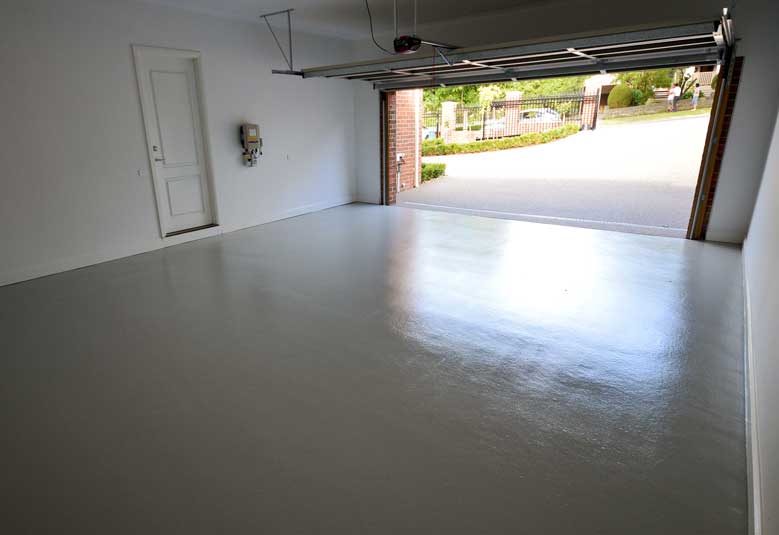
Metallic Epoxy Flooring
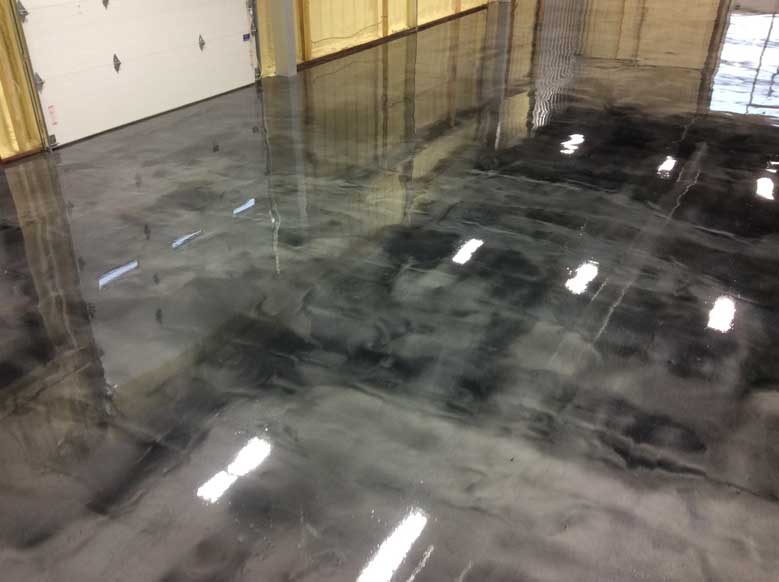
Metallic epoxy flooring is one of the most unique epoxy flooring styles on the market. These epoxy floors are created when metallic pigments are introduced to the epoxy resin mixture during the installation process. These metallic pigments give the floor its recognizable shimmering appearance. These floors are also available in numerous colors and can create one-of-a-kind designs. Some popular designs for metallic epoxy floors include colorful, swirling patterns and designs that mimic scenes from nature, such as lava, water, and the sky.
Decorative Flake Epoxy Flooring
Decorative flake epoxy flooring is used for both aesthetic and functional purposes. These floors create a look similar to terrazzo flooring, and the flakes themselves add texture to the floor that can aid in slip-resistance. Decorative flake epoxy floors are made when acrylic chips are layered over the epoxy base and topped with a thin, clear epoxy topcoat. The flakes come in many different colors, shapes, and sizes, from 1/16 to 1 inch. They can be broadcast over the floor to the user’s preference, from sparse to dense.
3D Epoxy Flooring
3D epoxy flooring is the same premise as adding a floor decal to a traditional flooring system. However, they’re different in their application and appearance. With a traditional floor decal, it’s applied directly over the flooring material. When it comes to 3D epoxy, the decal is installed over the epoxy primer, and a thick layer of clear epoxy topcoat is applied over the image. This gives the floor a feeling of depth and realism, which is where the floor gets its name.
Epoxy Flooring Applications
Residential Epoxy Flooring
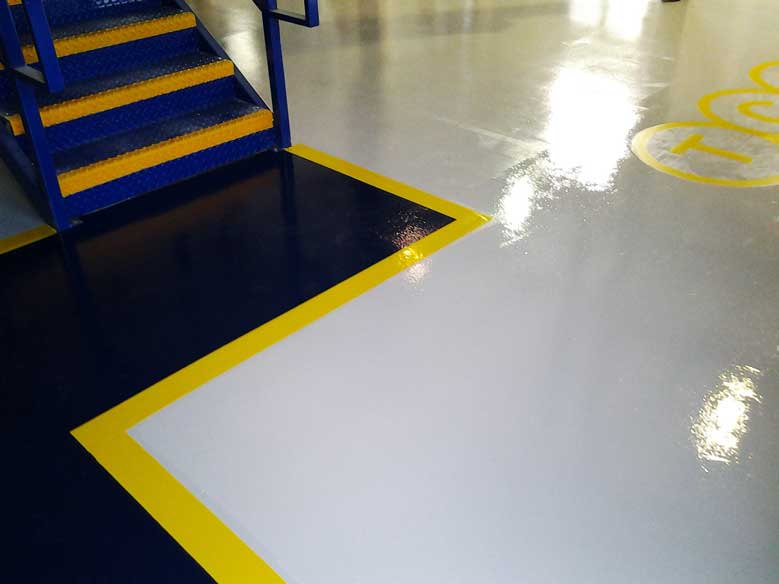
Homeowners have been incorporating more epoxy floors throughout their homes over recent years. This is due to epoxy’s high customization, long lifespan, and other benefits. Below are the various applications for residential epoxy flooring:
- Garages
- Kitchens
- Basements
- Living Rooms
These are the most common areas of installation. However, epoxy flooring can be installed in any room in the home with a suitable substrate.
Commercial Epoxy Flooring
- Hotels
- Retail Stores
- Malls
- Hospitals
- Restaurants
- Nursing Homes
- Schools
- Grocery Stores
Industrial Epoxy Flooring
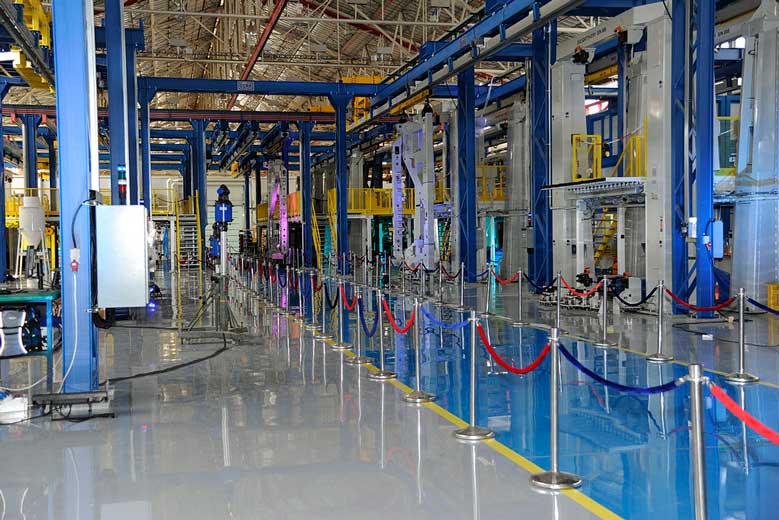
Epoxy flooring is usually utilized for its strength and longevity in industrial facilities. These spaces include some of the harshest working environments for any flooring material. Below are the most popular applications for industrial epoxy flooring:
- Factories
- Distribution Centers
- Warehouses
- Manufacturing Plants
- Airplane Hangars
- Data Centers
The Benefits of Epoxy Flooring
Durability
Epoxy flooring is a highly durable floor designed to handle a range of damaging factors, including hard impacts, abrasions, heavy loads, and high volumes of foot and vehicle traffic. According to Epoxy.com, epoxy flooring’s compressive strength is 10,000 psi, and the tensile strength is 3,500 psi.
Resistance
These floors are installed seamlessly, which means liquids cannot seep into any seams or cracks. Epoxy flooring also forms a non-permeable surface when it cures. Therefore it repels these substances. As epoxy flooring cures, it forms a non-permeable surface that repels water, various chemicals and reduces the likelihood of staining.
Longevity
This concrete coating is also known for its long lifespan. Epoxy flooring’s durability and resistant properties allow it to last for many years without needing significant repairs or premature replacement. According to Epoxy Network, epoxy flooring can last up to 30 years with proper maintenance and care.
Customization
One of the most appealing benefits to homeowners is this flooring system’s customizable options. These floors are recognized for their ability to be fully customized, thanks to the vast choices in colors, styles, patterns, and textures. This customization makes epoxy flooring remarkably versatile as it can fit most design and color schemes.
Ease of Maintenance
The low maintenance requirements of epoxy flooring make it a popular choice among business owners. These floors do not need any labor-intensive, time-consuming, or expensive maintenance routines or cleaning products. All that’s needed to properly maintain an epoxy floor is a broom or dust mop, wet mop, mop bucket, and pH-neutral floor cleaner. Dust mops are preferred in larger spaces as they’re faster and more efficient. The floor should be swept, or dust mopped daily, wet mopped with the pH-neutral cleaner weekly, and spot mopped as spills occur.
The Epoxy Flooring Installation Process
Cleaning and Inspection
The epoxy flooring installation process begins with the substrate being cleaned and inspected for damage, such as cracking, chipping, or flaking. Any significant damage needs repairing before the next step can begin. This is usually accomplished with an injectable epoxy crack filler and powdered concrete patches.
Floor Preparation
Once the repairs are complete, the floor will need to be prepped. This is typically completed using either a floor grinder fitted with a coarse diamond grinding wheel or a shot blaster. Floor grinders are more commonly used as they’re more efficient than shot blasting. Whichever method is used, the floor’s surface is either ground down or shot blasted away to remove minor blemishes, level the floor, and ensure proper adhesion between the substrate and epoxy.
Epoxy Application
With the floor prepped, a base layer of epoxy primer is applied, and the epoxy resin and hardener are mixed while this base dries. Several layers are applied to reach the desired thickness, accounting for the final clear topcoat. After these layers are applied and any patterns made, the topcoat is applied to seal the floor.
Curing
The final part of the process is the curing process. After the final topcoat is applied, the floor needs to cure before it can be used. After 24 hours, the floor is 90% cured and can support limited foot traffic. After 72 hours, the floor is 100% cured and is ready for full use.
Why Hire a Professional?

Why Basement Epoxy Flooring Is the Ultimate Finished Basement Choice
The Modern Finished Basement Trend Finished basements have become essential living extensions of the home. No longer dark, unused storage zones, they now serve as entertainment spaces, gyms, guest suites, studios, and recreational hubs. As basements evolve into...

Transform Your Garage with Premium Epoxy Floor Coatings
Why Garages Deserve Better Flooring The garage has evolved from a simple storage space into a multifunctional environment. Today, it serves as a workshop, gym, hobby studio, and even an extension of the home's entryway. Yet many garages still rely on bare concrete...

Why Concrete Polishing Is the Smart Choice for Long-Lasting Floors
The Growing Demand for Polished Concrete Floors Across residential, commercial, and industrial environments, polished concrete has surged in popularity. Homeowners and facility operators increasingly value surfaces that endure heavy use without losing their visual...

Metallic Epoxy Flooring in Naperville: Stunning Designs & Durable Solutions for Modern Homes
The Rise of Metallic Epoxy Flooring in Naperville Naperville homeowners are increasingly turning to metallic epoxy flooring to elevate the visual and functional appeal of their modern living spaces. This flooring style brings together high-end design aesthetics and...

How to Choose the Best Pool Deck Resurfacing Option for Chicago’s Weather
Why Pool Deck Resurfacing Matters in Chicago A pool deck is more than decorative edging around your swimming area. It’s a structural surface that absorbs impact, endures constant moisture, and withstands dramatic temperature swings year-round. In a climate like...